



Trusted by teams who make SAP work every day
The Technician Is On Site. The Information Isn’t.
The service order is in SAP. The asset history is in SAP. The parts list is in SAP. The technician has a printout, a phone with no signal and a customer who was told it would be fixed today. When it is not, a second truck rolls, and the invoice goes out three weeks after the work.
-
Second visits are an information problem. Technicians arrive without the right part, the service history or the drawing. Benchmarks put the median first-time fix rate around 75 percent; unresolved calls average 1.6 additional dispatches.
-
Admin eats the day. Surveys put technician admin time at close to a fifth of working hours, and paperwork is the part of the job they like least. Service reports written on paper are re-typed by someone else.
-
Time is confirmed late, so billing is late. Hours entered at the end of the week, or reconstructed by the office calling the technician, mean the invoice reaches the customer weeks after the visit.
-
Offshore, underground, at the customer’s plant: no signal. Where the app stops, the technician writes it down and the data arrives when they are back at a desk, if at all.
-
The dispatcher cannot see the job. Status lives in three systems and a phone call. Scheduling the next job means guessing when this one ends.
Everything the Technician Needs, Wherever the Job Is.
Business Applications
The technician’s day on one device: today’s service orders, the asset’s history and documents, the checklist, the parts on the van, time and material recording, photos, the customer’s signature and the service report as a PDF before leaving the site. Works offline for days, not hours.
Process Orchestration
A completed job confirms time and material against the SAP service order and, where you use it, to time recording in SAP HR. The billing request is created from actuals the same day. A part used on site reserves the replacement; a follow-up found during the visit opens the next order. The customer gets the report from SAP, not from a phone call.
AI Agents
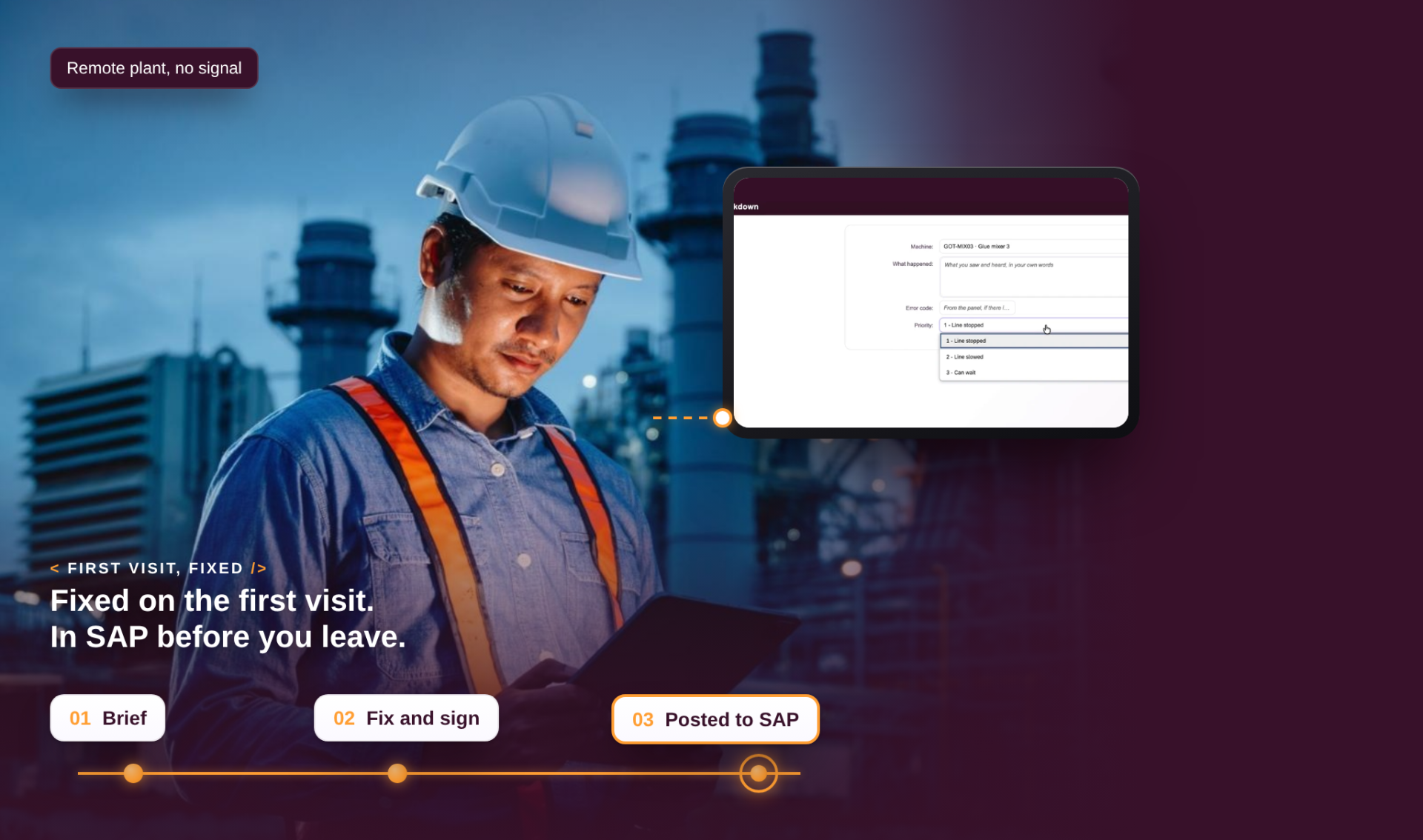
Before the visit, the agent briefs the technician: what failed last time on this asset, what parts were used, what the customer reported. On site, it suggests likely causes from service history. Afterwards, it drafts the service report from the checklist, photos and notes for the technician to confirm.
One Platform for the Whole Process.
-
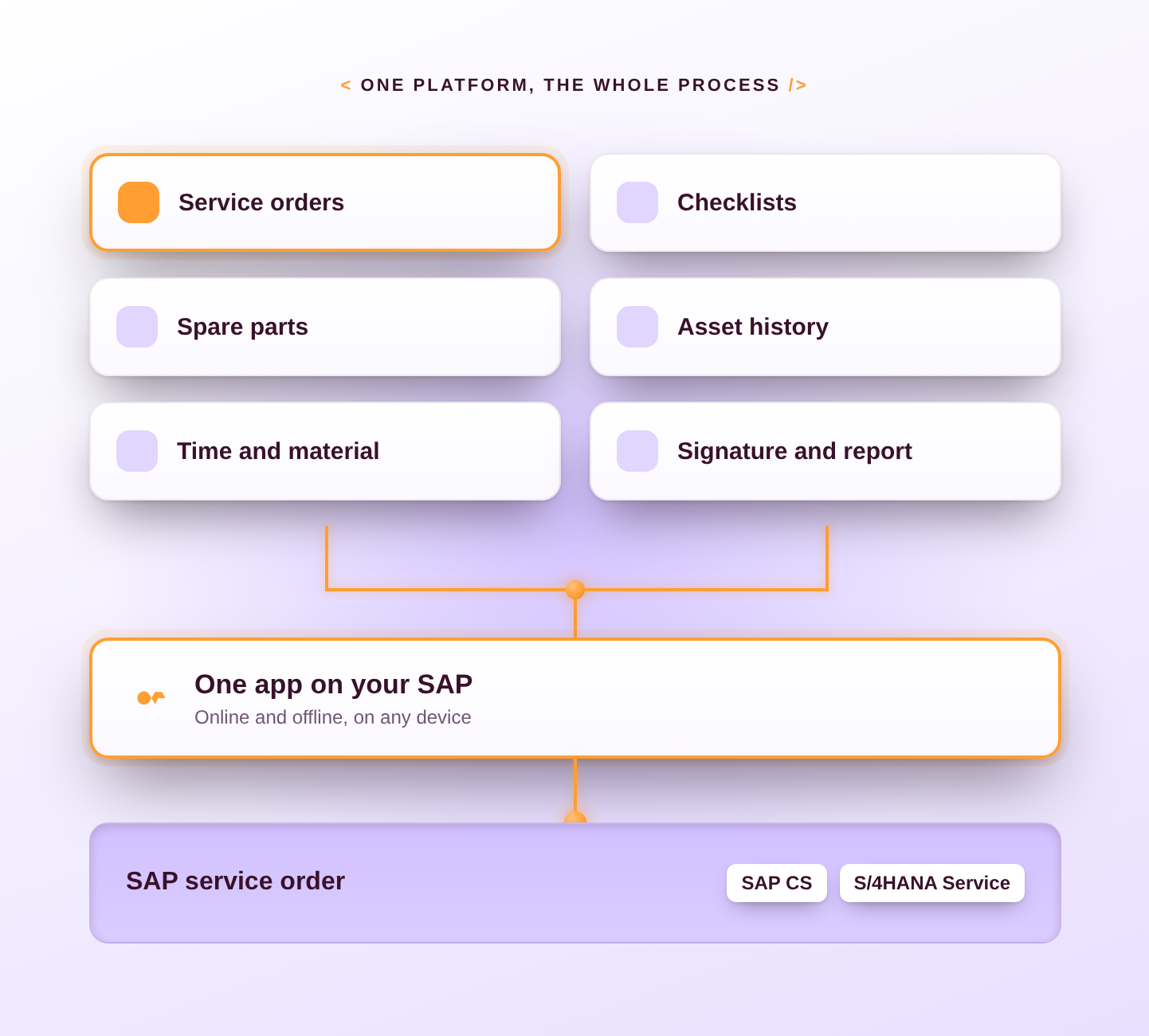
Service order execution and daily job lists (SAP CS and S/4HANA Service)
-
Service checklists and inspection reports, built from the equipment’s parts list
-
Spare parts lookup, van stock and part requests
-
Asset history, drawings, manuals and documents on the device
-
Time and material confirmation on site, feeding billing and HR time recording
-
Customer signature, photos and service report PDF on the spot
Field Teams That Work Anywhere.
Whether you’re looking for proof, evaluating the platform, or ready to build, you’re one click closer to execution.
applications for service technicians, with time recording posting to SAP CS for invoicing and to SAP HR
Hauni
engineers at remote sites no longer return to an office to record their day
Vattenfall
field engineers running work management on SAP
United Utilities
users managing orders online and offline
Statkraft
Field service app for SAP showing a service order with asset history, checklist and customer signature step
Manage orders online and offline
Work offshore
Built on SAP. Built for the Work.


Native on SAP.
Service orders, confirmations, equipment and billing stay in SAP CS or S/4HANA Service. Neptune adds the technician’s application on top, under SAP authorizations, with no separate field service platform to license per technician.


Built for Where Work Happens.
Offline for days offshore or underground. Confirmations queue and post in order when the signal returns.


Live in Weeks, Not Months.
Start from the service template with checklists built from your equipment and parts lists; Vattenfall ran its pilot at two remote sites in two months.


Ready for Clean Core and S/4HANA.
SAP CS runs in compatibility mode until 2030, and S/4HANA Service comes after. The same application serves both.