





regular-banner-bg
Build, connect and run. All inside SAP

Native Low-Code That Works Like SAP. Because It Is.

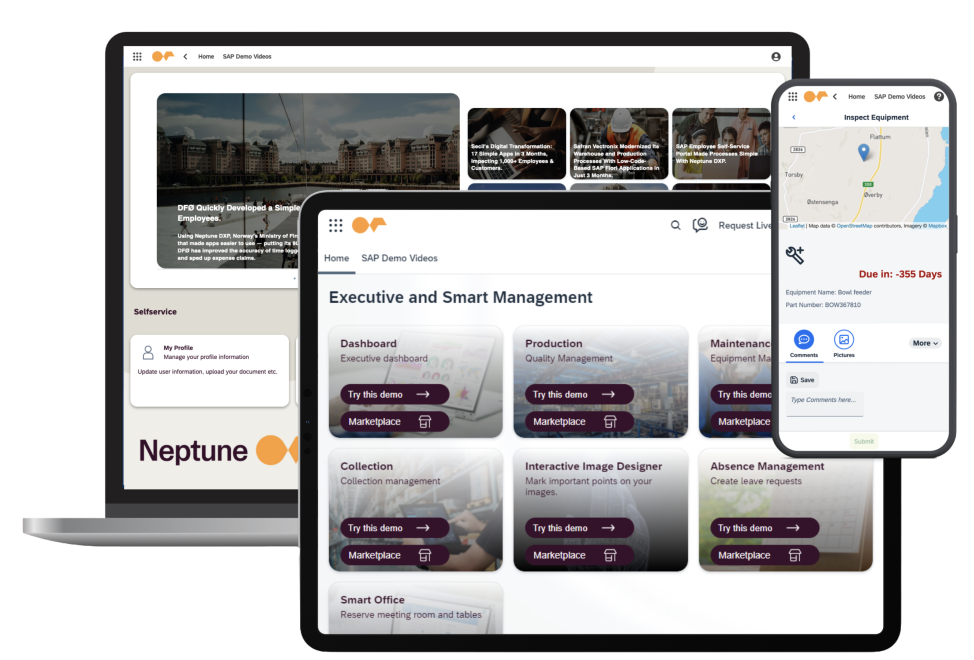
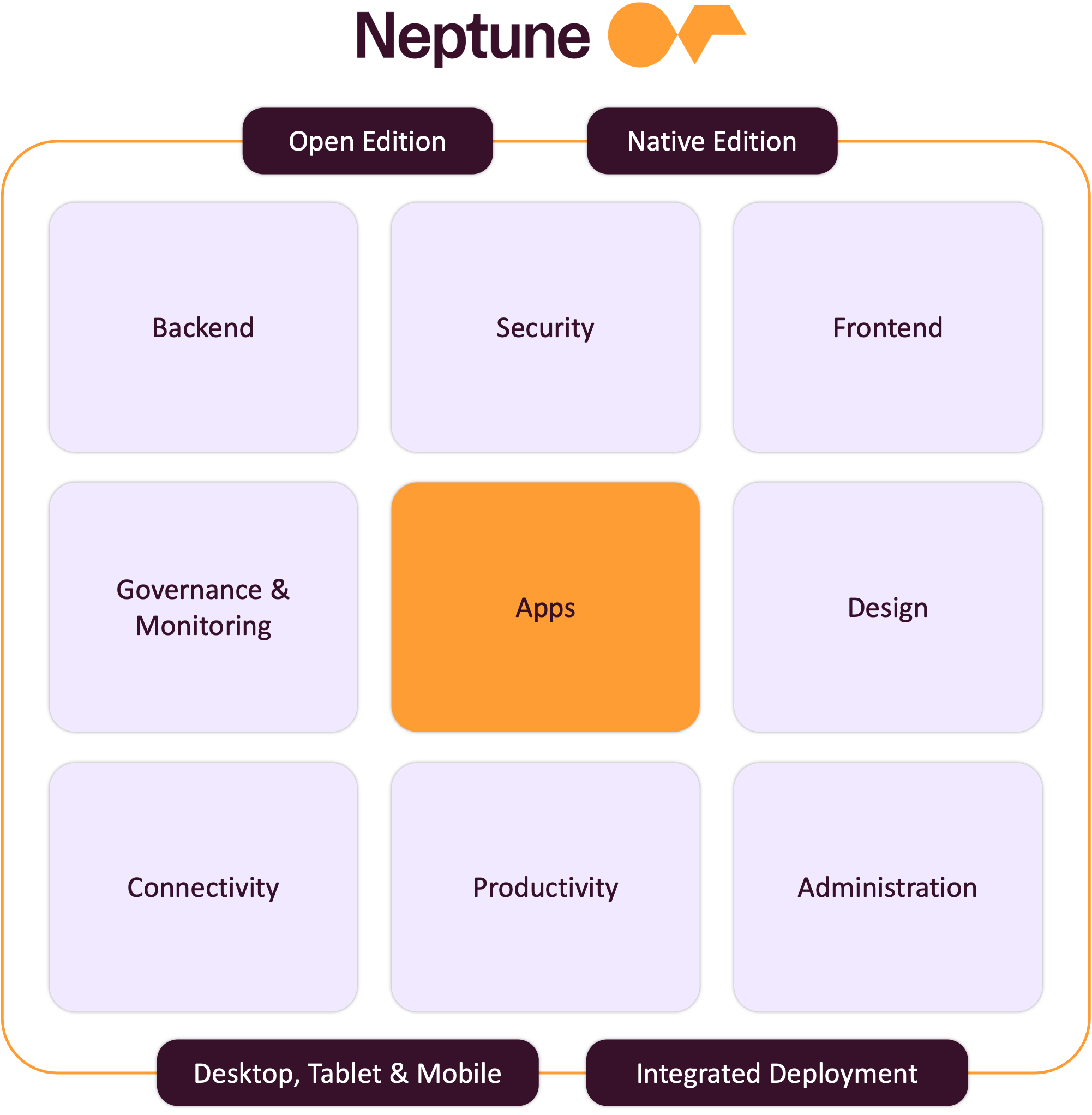
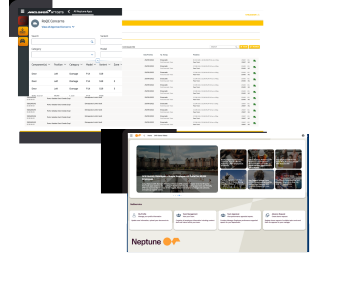
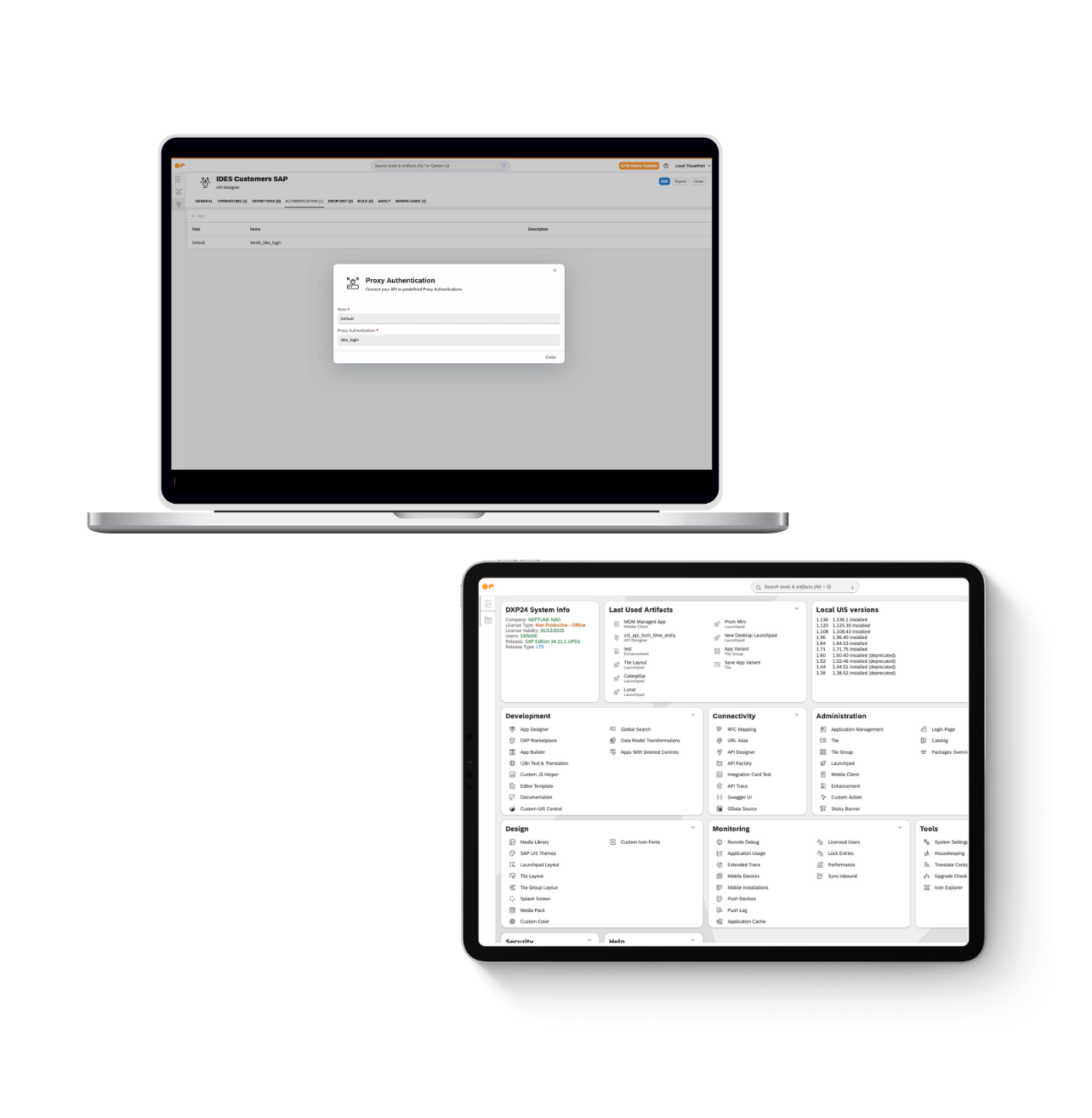
Neptune lets you build and launch modern apps directly in SAP ECC or S/4HANA without middleware, replatforming, or complexity. From one cockpit, your developers and business teams can ship intuitive, offline-capable, SAP-compliant apps faster than ever. It is low-code that runs in your landscape, respects your clean core, and scales without surprises.
Low Code Hero

Trusted by SAP Teams Who Run Lean, Fast, and Clean

FONTERRA_WHITE
FORSVARET_WHITE
HITACHI_WHITE
NZ DEFENCE_WHITE
RUST-OLEUM_WHITE
SECIL_WHITE
FONTERRA_WHITE
FORSVARET_WHITE
HITACHI_WHITE
NZ DEFENCE_WHITE
RUST-OLEUM_WHITE
SECIL_WHITE
Built for the teams who actually build SAP apps

One Enterprise Low-Code Platform. Everybody Wins.

Whether you are writing ABAP or designing screens, Neptune adapts to your workflow. Developers get full-code control and native SAP access. Business teams get modern UI tools. Both get results, faster.  
For Suits For Geeks

Business Teams

  • Empower teams with intuitive UI tools.
  • Deliver modern apps for every device.
  • Differentiate from SAP standard where needed with tailored apps that put you ahead of your competition .
NLCModule 3_Card 2 Bigger

Developers

  • Use your existing SAP skills: ABAP, SAPUI5, JavaScript.
  • Reuse backend logic and existing authorizations.
  • Create full-stack Fiori apps from one cockpit .
NLCModule 3_ Card 1 2
Why native low-code for SAP

Because You Should Not Have to Choose
Between Speed and SAP Standards.

computer

Simple

Simplify SAP Development.

Drag and drop or write your own code. It is flexible for every skill level, from functional consultants to pro developers. 

code

Clean

Keep your Core Clean.

Build outside ECC and S/4HANA using side-by-side extensibility or build inside ECC and S/4HANA on-stack while supporting a clean core, depending on your requirements and starting point. No core modifications and no future regrets.

sap
NLCModule 4_ Card 2 noBG2
mouse

Integrated

Real-time SAP Integration.

OData, RFCs, BAPIs, SAP tables are already connected. Every app uses your SAP roles, transports, and lifecycle tools. 

ECC, Migrating, or Already There

One Low Code Platform for Every Stage of Your SAP Journey.

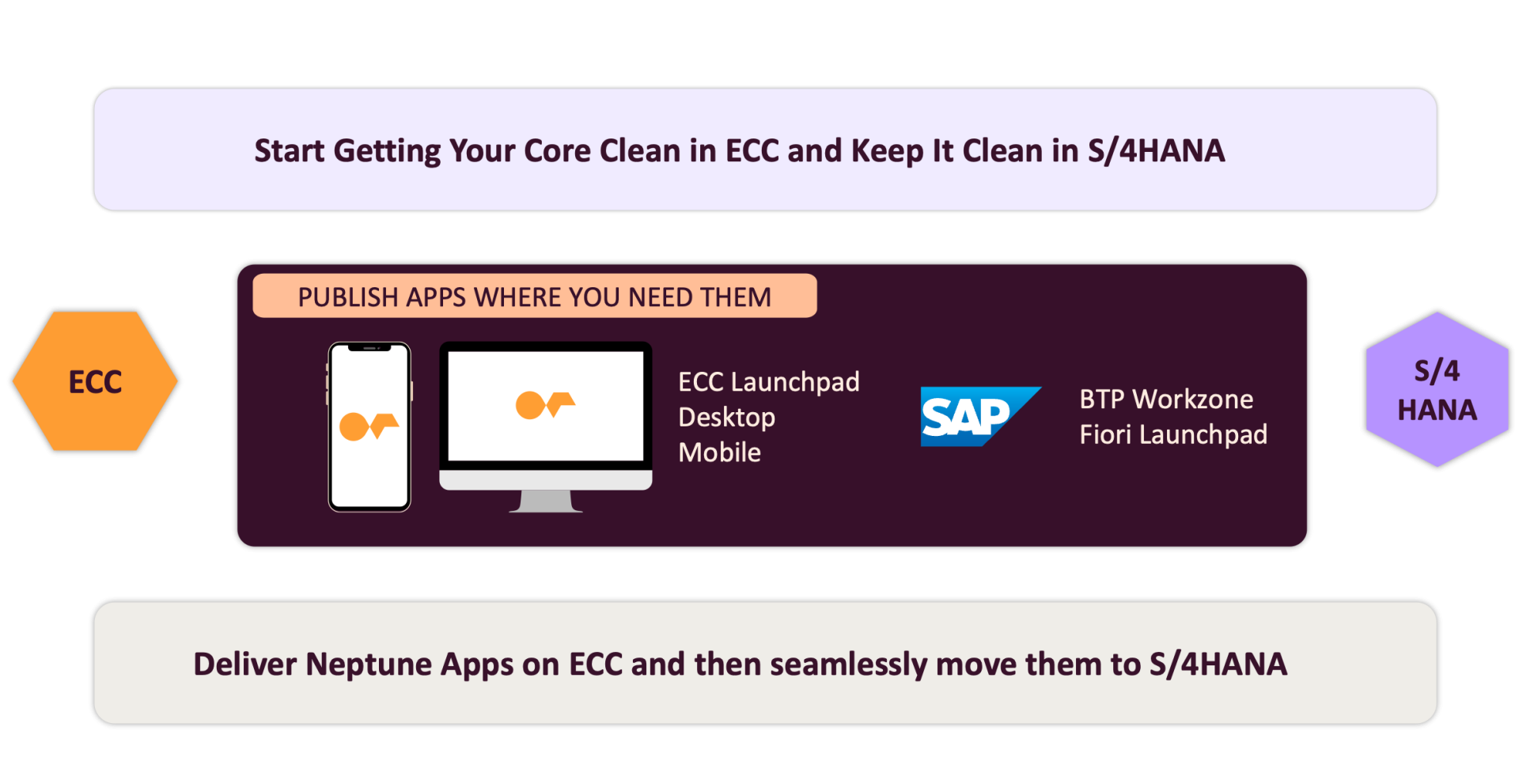
Apps built on Neptune run on ECC and on S/4HANA. The work you do before a migration is not work you repeat after it.
Start from wherever you actually are.
cards-v2-bg4
image

Modernizing on ECC

Mainstream maintenance for ECC ends in 2027, but modernizing does not have to wait for a migration decision. Add intuitive apps, process automation and offline mobility to the system you run today, without replatforming what already works.

cards-v2-bg4
icon

Planning the Move

If S/4HANA is on the roadmap but not yet underway, the real risk is building everything twice. Neptune supports ECC and S/4HANA side by side, so the apps you build now carry across instead of being rewritten later.

cards-v2-bg4
icon

Already on S/4HANA

S/4HANA does not deliver innovation out of the box. Extend it with the apps and process changes your business actually asked for, built in the extension layer so the core stays clean.

Low-code for high-impact SAP teams

Everything You Need to Deliver
SAP Apps Faster .

SAP Icon
Native SAP Runtime 

Runs inside ECC and S/4HANA without middleware .

Drag_Drop
Drag and Drop UI Builder 

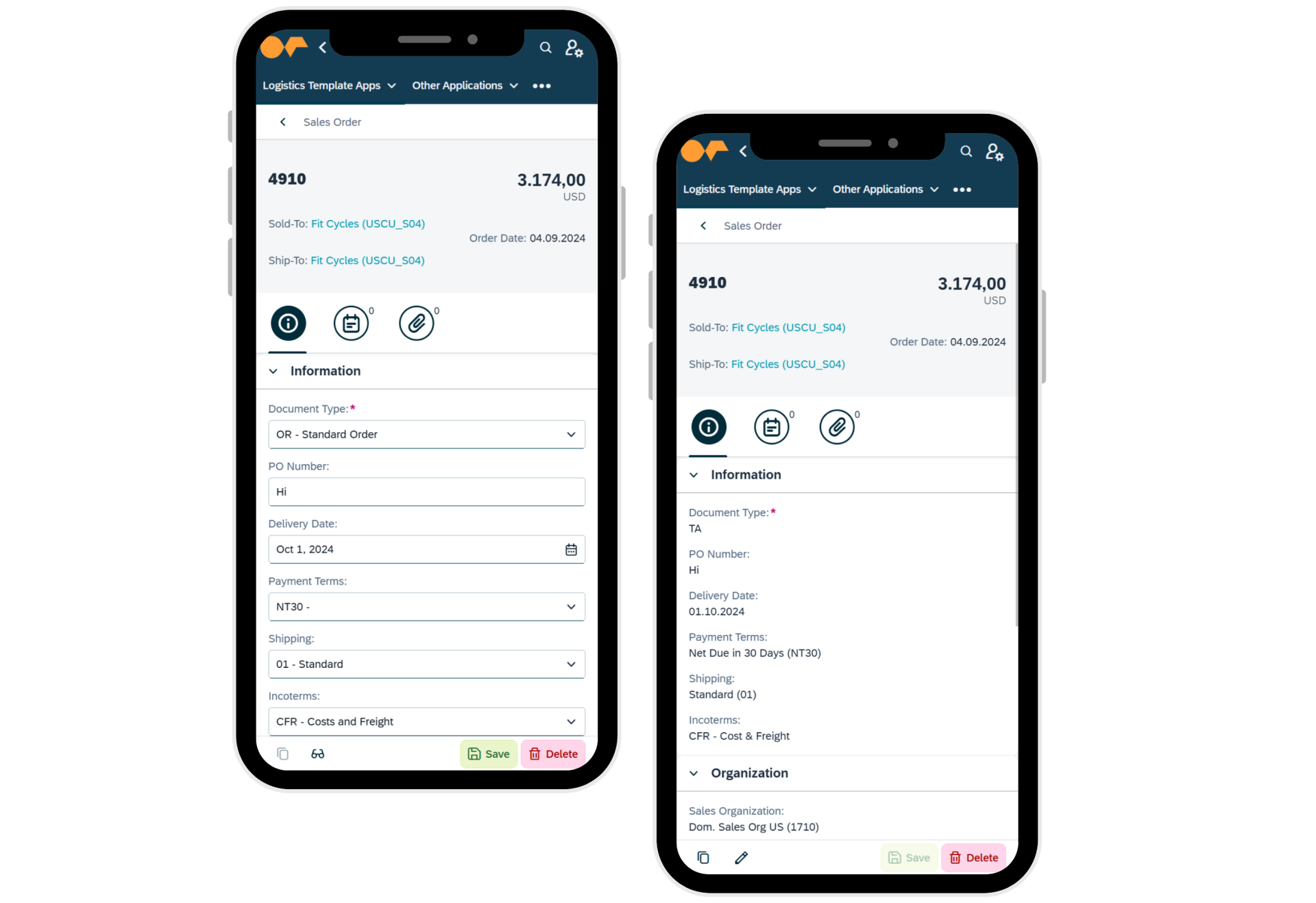
Rapid screen design for mobile, tablet, or desktop .

Low Code 2 Icon
Full-Code Flexibility

Use JavaScript or TypeScript – Leverage pro-code capabilities empowered by low-code designers.

Mobile Offline 2
Offline Capable 

Execute and audit even with no connection. Sync later. 

Roles and Logic
Reuse SAP Roles and Logic 

Use what you have already built: BAPIs, tables, OData .

UI 1 Icon
SAP Fiori UX Ready 

Themes, Launchpad integration, and pixel-perfect UI5 support .

Choosing a Low Code Platform

Most Low Code Platforms Connect to SAP.
Neptune Runs Inside It.

Both designs are legitimate. Which one is right for you depends on a single question: is SAP one data source in your architecture,
or is it the system your business actually runs on? Here is the honest version of that trade-off, and an outside view of it.
cards-v2-bg
icon

The Trade-Off, Stated Plainly

General-purpose low code platforms are built to connect to many systems, with SAP as one of them. That is the right design when SAP is one source among several. It also means middleware to maintain, a synchronized copy of your data to secure, and a second authorization model to keep in step with the first.

Neptune builds on the SAP system you already have, using the authorizations and business logic your team already maintains. That makes it a narrower product on purpose. If you are building customer-facing applications with no SAP dependency, a general-purpose platform will serve you better, and we would rather tell you that now.

cards-v2-bg
icon

An Outside View

SAPinsider examined why SAP warehouse AI pilots stall before they reach the floor. Their conclusion was architectural rather than technical: execution tools that cannot see the custom logic running a process are unable to automate it, no matter how capable the model behind them is.

That constraint is the same one that separates low code platforms. It decides which of them can automate an SAP process, and which can only report on one.

Frequently
Asked Questions

Didn’t find what you need?

Low code is a way of building software where most of the application is assembled visually, from configured components, rather than written line by line. The platform generates the underlying code and handles the plumbing: the interface, the data binding, the deployment.

It is not a shortcut around understanding the problem. It removes repetitive work, not judgment. A badly designed process built quickly on low code is still a badly designed process.

No code is built for people who are not developers. Everything happens through configuration, and you cannot drop below that layer.

Low code assumes someone eventually will need to. Most of the app is visual, but you can write code where the requirement is genuinely complex, so you are not blocked the moment you reach the edge of what the tool anticipated.

In enterprise SAP work that difference decides whether a project finishes. Custom logic built up over twenty years rarely fits inside what a no code tool expected.

Speed on the repetitive parts, and nothing else. A developer using low code still decides the data model, the authorizations and the process logic. What they stop doing is hand-building the same screens, the same list views and the same deployment steps for the hundredth time.

For an ABAP team the practical test is whether the platform gets out of the way when a requirement is unusual. If it does not, you have traded typing for fighting the tool.

When the application has no dependency on your business systems and the user experience is the product. A consumer app, a marketing site, a game. Those are better built on a general-purpose stack, and a low code platform will feel like a constraint.

Low code earns its place when the value sits in the process and the data behind it, and the interface is simply how people reach that process.

Most low code platforms treat SAP as an external system to integrate with. That means middleware, a synchronized copy of your data, and a second authorization model to maintain alongside the first.

A platform that runs inside SAP uses the data, authorizations and business logic already there, so nothing is duplicated. The question to ask any vendor is not whether they connect to SAP, but where the app actually runs.

Yes – Neptune DXP runs natively in both. You can start modernizing ECC today and carry everything forward to S/4HANA. This SAP-Native Low-Code Platform is fully SAP-certified across ECC, S/4HANA, and ABAP Cloud environments.

SAPUI5, JavaScript, React, Angular, down to standard HTML. Your developers choose what fits best.

Absolutely. Neptune includes offline-first capabilities for inspections, logistics, maintenance, and more. All are synced with SAP.

No. Neptune works with BTP but does not require it. Everything runs inside SAP with no additional runtime or license layer.

Yes. Neptune is ABAP Cloud ready and supports clean-core principles from day one.