Modern Warehouse Execution on SAP EWM Requires More Than RF Screens.
Warehouses are execution environments, not back-office systems.
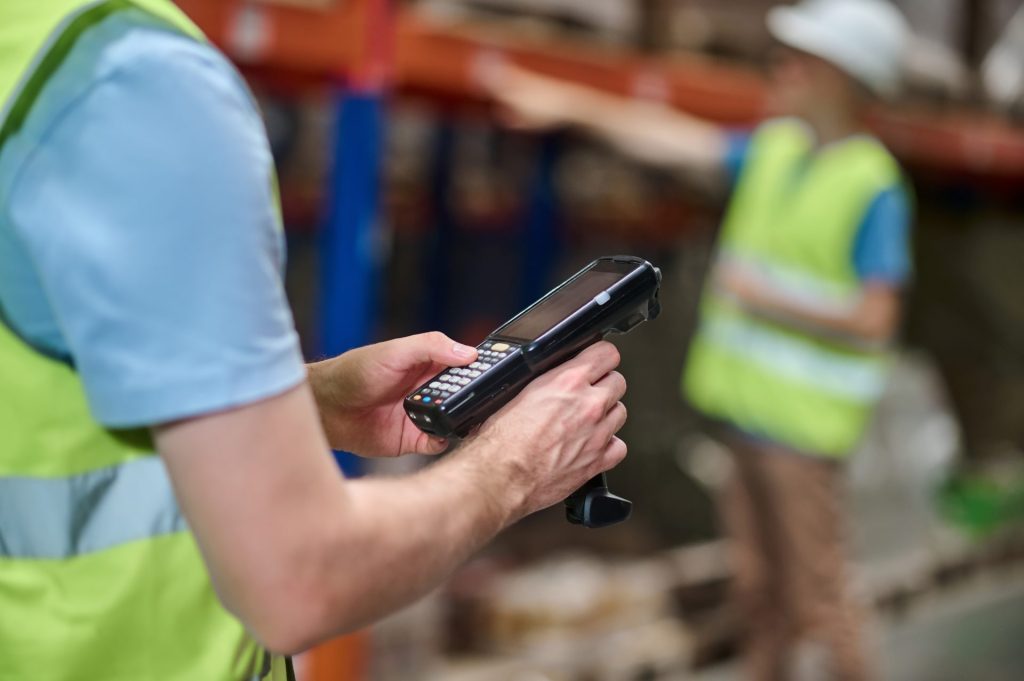
Picking, goods receipt, physical inventory, and internal movements all happen on the move. These processes are executed by mobile workers using handheld devices, scanners, and mobile warehouse applications. Without reliable mobile execution, modern SAP EWM warehouse processes simply do not function.
SAP EWM provides the functional depth and process control required to run complex warehouse operations at scale. The challenge is not capability. The challenge is execution on the warehouse floor. a reminder of why we exist as a company: to equip people to reimagine what is possible inside their SAP landscape and beyond.
Warehouse Execution Is Mobile by Default
SAP EWM is designed to orchestrate sophisticated warehouse processes across inventory, labor, and material flow. Its strength lies in its process logic, configurability, and integration into the broader SAP landscape.
Where many organizations struggle is translating this strength into fast, intuitive, and resilient execution for warehouse workers.
Warehouse teams depend on mobile SAP EWM execution that:
- works reliably on handheld devices
- integrates seamlessly with scanners and device sensors
- supports task-based workflows aligned with real warehouse roles
- remains usable under real-world conditions, including network fluctuations
Mobile execution is no longer an add-on. It is the primary interface to SAP EWM on the warehouse floor.
Evolving Beyond Classic RF-Based Execution
Technologies such as SAP ITSmobile and the classic RF framework have long played an important role in enabling mobile SAP execution. They allow SAP GUI transactions to be rendered on smaller devices and remain widely used for standard RF scenarios.
However, as warehouse operations become more dynamic, customer-specific, and sensor-driven, organizations increasingly reach the practical limits of screen-based RF execution.
Typical challenges include:
- Limited flexibility when adapting workflows to optimized picking paths or role-specific tasks
- Long change cycles for UI adjustments that require deep SAP expertise
- Complex integration of modern device sensors such as RFID, NFC, or camera-based scanning
- Inconsistent user experience across different devices and worker roles
- Lower adoption, especially among temporary or seasonal workers
At this stage, the bottleneck is not SAP EWM itself, but how mobile execution is implemented.
Modern warehouses need mobile applications designed for execution first, not for rendering transactions.
Decoupling Execution from the SAP GUI While Keeping SAP at the Core
A sustainable approach is to separate mobile execution from SAP GUI rendering, while keeping SAP EWM as the single source of truth.
SAP EWM configuration, business logic, and process control remain unchanged. What changes is how warehouse workers interact with those processes.
Instead of navigating generic RF screens, workers are guided through task-oriented, role-based mobile applications that align directly with SAP EWM logic. Picking, goods receipt, and inventory tasks become focused execution flows rather than transaction navigation.
This approach:
- preserves SAP clean-core principles
- reduces dependency on SAP GUI-based interfaces
- significantly improves execution speed and usability
SAP remains the backbone. Execution becomes fit for purpose.
Sensor Integration as a Core Requirement
Another highlight of the year was doubling down our presence and contribution to major SAP and industry conferences. Sapphire, TechEd, UI5con, and the SAP User Group and vertical forums brought back the energy of meeting customers face to face. It Modern warehouse execution increasingly depends on device sensors.
RFID enables automated identification. NFC supports location and asset tagging. Cameras are used for scanning, verification, and documentation. These capabilities are becoming standard operational requirements.
Native mobile platforms, particularly Android-based handhelds, allow these sensors to be integrated directly into SAP-connected workflows. This enables automation at the point of execution without introducing shadow systems or duplicating data.
Rather than extending SAP with isolated tools, sensor integration becomes a natural extension of SAP EWM-driven processes.
Accelerating SAP EWM Mobile Execution with Neptune
Neptune provides a SAP-native mobile execution layer that accelerates and extends SAP EWM without replacing it.
Instead of rendering SAP GUI screens, Neptune exposes SAP EWM processes through SAP-native APIs and wraps them in mobile-first applications designed specifically for warehouse execution.
Neptune DXP enables:
- low-code and no-code development of mobile warehouse applications
- native Android support for modern handheld devices
- seamless integration of RFID, NFC, barcode scanners, and cameras
- flexible, role-specific UI design optimized for warehouse execution
- offline-capable execution tolerant to network outages and dead zones
- deployment across heterogeneous device landscapes, including Zebra, Honeywell, tablets, and smartphones
Applications are developed once and deployed across multiple platforms. This allows organizations to use both industrial handhelds and consumer-grade devices, often increasing usability, acceptance, and productivity.
Most importantly, SAP remains at the center. Neptune acts as an accelerator for SAP EWM execution, not a replacement.
Deep Warehouse Expertise, Built on SAP
Modern warehouse execution is not just a technology challenge.
It’s a process challenge that requires deep SAP EWM know-how and real operational experience.
That’s why Neptune works closely with specialized partners like HRC Software.
HRC brings deep expertise in SAP EWM–driven warehouse processes, helping organizations design and execute mobile, task-focused warehouse solutions that actually work on the warehouse floor.
Faster Change Cycles Without Breaking the Core
Warehouse processes evolve continuously. Slotting strategies change. Picking logic is refined. New devices and automation technologies are introduced.
When mobile execution is tightly coupled to SAP GUI rendering, even small changes can trigger long development and testing cycles.
By decoupling execution from SAP GUI screens, mobile workflows can evolve independently of SAP upgrades. This allows warehouse teams to adapt faster while IT retains governance, security, and clean-core compliance.
Operational improvement becomes iterative instead of disruptive.
From RF Screens to Real Execution
This shift is not about replacing SAP EWM.
SAP remains the system of record for warehouse data and processes.
The shift is about execution quality.
By moving from RF screens to mobile-first SAP EWM execution, warehouse teams increase speed, reduce errors, and improve user adoption. Mobile execution becomes an enabler of performance rather than a constraint.
Why Warehouse Mobility Is the Right Starting Point
Warehouse execution is highly measurable. Improvements in picking speed, inventory accuracy, and goods receipt efficiency become visible quickly.
That makes SAP EWM mobile execution an ideal starting point for broader digital execution initiatives. Success on the warehouse floor builds confidence and creates momentum for scaling modernization across logistics and operations.
Modern warehouse execution starts where the work happens.